

- 15254 views
Overview: What is a lash lift and why does the ingredient matter?
Lash lifting is a professional cosmetic treatment that temporarily modifies the curvature of the hair fiber of the eyelashes, achieving an eye-opening effect without extensions. To achieve this, chemical solutions are used to break the disulfide bonds of keratin, the fiber is repositioned over a mold, and finally, the new bonds are "fixed." The result and, above all, the safety of the process largely depend on the reducing agent you choose: cysteamine or thioglycolic acid (and its salts, known in cosmetics as thioglycolates).
In the European market, traditional formulations based on thioglycolates coexist with more recent ones that use cysteamine. They are not the same in terms of smell, pH, tolerance, processing times, or response on fine and sensitized eyelashes. If you run a salon in Spain, choosing wisely is key: it involves understanding how each molecule works, what the EU regulations say (CosIng/Regulation 1223/2009), and how to minimize risks in such a delicate area as the eye contour.
How they act: simple chemistry of disulfide bridges
Eyelashes, like hair, are primarily composed of keratin. Their shape is maintained thanks to disulfide bonds between cysteine residues. Reducing agents break these bonds to allow the fiber to adopt a new curvature. Then, a second step (oxidizing or "neutralizing") reforms the bonds to "lock" in the achieved shape. Both cysteamine and thioglycolic acid are reducing agents, but they differ in their reactivity, working pH, odor, and tolerance profile.
Cysteamine: technical profile, advantages, and limitations
Cysteamine (often in the form of cysteamine HCl) is a reducing agent listed in the CosIng database as an ingredient with a function for curling/smoothing hair and as a reducer. In practice, cysteamine lifting systems usually operate in more moderate pH ranges and with a gentler sensory experience than traditional thioglycolates.
- Perceived advantages in the cabin: Softer color, less alkaline pH in many formulas, good response on fine or sensitized lashes, and less risk of "frizz" if the protocol is followed.
- Application experience: Progressive and more "elastic" curve, slightly wider margin against overprocessing when working with conservative times and an appropriate mold selection.
- Marketing and positioning: It is often presented as "kinder" or "nourishing." Note: the fact that the treatment includes conditioning agents (e.g., panthenol, amino acids) does not eliminate the need for careful professional handling.
Points to watch: cysteamine has a characteristic (sulfurous) odor, it can cause irritation if it comes into contact with the skin or mucous membranes, and no It is exempt from damage if time, pH, or quantity is abused. As with any reducing system, there is a risk of overprocessing, especially on previously bleached, repeatedly dyed, or very fine lashes due to genetics.
Thioglycolic acid/thioglycolates: the powerful "classic"
Thioglycolic acid and its salts (ammonium, ethanolamine, etc.) have been used for decades in hair perms and lifts. They are effective and predictable, with a long history of professional use. In the EU, they appear with specific conditions of use in Annex III of the Cosmetics Regulation, including maximum concentrations, pH ranges, and warnings, especially in products for hair removal and hair curling/straightening.
- Perceived advantages in the cabin: Great capacity for breaking disulfide bridges, clear and consistent results, and highly standardized protocols.
- Application experience: Usually shorter times at a more alkaline pH, which requires precision and control to avoid overprocessing (resulting in "gum" or frizzy hair).
- Clear regulations: The regulatory framework for thioglycolates in the EU includes limits and warnings, which require compliance with labeling, conditions of use, and "professional use only" when applicable.
Points to watch: More intense sulfur smell, greater potential for irritation if there is contact with the skin or eyes, and a narrower safety window on delicate lashes. The application technique and control of time/pH are crucial.
Practical comparison: Which one should I choose for my living room?
- Perceived security: Many professionals identify cysteamine as "kinder." On thin lashes or sensitive clients, it can offer a somewhat more forgiving operating margin if conservative times are respected. However, "kinder" does not mean harmless: it requires the same rigor and ocular barriers.
- Efficacy and definition of the curve: Thioglycolates tend to create a more pronounced curve in less time, but this speed increases the risk if you do not master the technique. Cysteamine usually builds the curve more gradually.
- Smell and sensory experience: Cysteamine is generally more tolerable; thioglycolates have a stronger smell.
- Tolerance in "complicated" tabs: On very thin, dry, or previously treated lashes, cysteamine may be the first option. On thick or resistant lashes, a system with thioglycolate may be more efficient.
- Regulation in the EU: Thioglycolates are subject to specific conditions (concentration, pH, warnings, and, if applicable, professional use). Cysteamine is listed in CosIng as a reducer/waving agent, and its safety is determined through product safety assessment (PIF) and use according to labeling.
- Commercial positioning: If your clientele values "gentle" formulas or those "inspired by Korea," a line with cysteamine might fit. If you are looking to standardize very noticeable results on resistant lashes, a professional line with well-tested and documented thioglycolates is appropriate.
Regulation in the EU: the essentials you must comply with
Any eyelash lifting product that you market or use professionally in the EU must comply with Regulation (EC) No. 1223/2009. This implies, at a minimum:
- Responsible Person in the EU: Each product must have a Responsible Person who ensures compliance.
- Product Information File (PIF): Safety assessment by a qualified evaluator, complete formula, stability data, expected exposure (periocular area), relevant tests, and justification of claims.
- Notification in CPNP: Before being marketed, the product must be notified in the Cosmetic Products Notification Portal.
- Labeled: INCI list, warnings and instructions for use in Spanish, nominal content, batch, PAO/expiration date, Responsible Person's details, product function, and country of origin when applicable.
- GMP: manufacturing in accordance with Good Manufacturing Practices (ISO 22716).
- CosIng as a technical reference: Consult the official entries for cysteamine and thioglycolic acid to learn about applicable functions and conditions. In the case of thioglycolates, there are harmonized restrictions in Annex III (concentration/pH/warnings).
Note: Eyelash treatments are applied in an area of special risk. The labeling must include clear safety warnings (e.g., avoid contact with eyes and skin, use of barriers, exposure time, proper neutralization, "professional use only" when applicable). Adhering to the fine print significantly reduces the risk of incidents and claims.
Best cockpit practices to minimize risks
- Prior consultation and informed consent: allergies, eye sensitivity, recent treatments (dyes, perms, keratin), use of retinoids, pregnancy/breastfeeding, dermatological or ophthalmological conditions.
- Indicative skin test: Although it does not replace individual evaluation, it helps to detect sensitivities. Conduct it well in advance and document the result.
- Barriers and isolation: Well-fitted silicone patches, petroleum jelly, or appropriate protectors to prevent the reducer from touching the skin or the eyelid edge.
- Minimalist dosing: A thin and even layer, leaving a margin from the edge of the eyelashes. Avoid saturation and "pools."
- Strict times and pH: Respect the manufacturer's table. When in doubt, less is more, especially with thin or sensitized eyelashes.
- Impeccable neutralization: The oxidizing step is as critical as the reducing one. Without proper neutralization, the new form does not set, and damage increases.
- Hygiene and utensils: clean and disinfected tools. Do not reuse the product. Do not decant into unidentified containers.
- Registration and traceability: Record batch, date, applied times, and observations. It facilitates the management of any incident.
- Realistic aftercare: 24–48 hours without water/intense heat/steam, avoid curlers, do not rub. Recommend compatible conditioning serums after that period.
Cysteamine vs thioglycolate: recommended use cases
- Choose cysteamine when: The client profile prioritizes sensory comfort; fine, dry lashes or those with a history of treatments; you seek natural and elastic curves; you want a slightly more forgiving "window" for junior staff training (always supervised).
- Choose thioglycolate when: You work with vigorous and resilient tabs; you need very marked results in less time; you have experienced technicians and strict control protocols.
- Mixed strategy: Having both lines and selecting based on the initial diagnosis maximizes results and builds customer loyalty.
Market trends and "Korean-inspired" claims
The rise of "Korean-inspired" protocols has highlighted formulas with cysteamine, light emulsions, and nutrition steps with peptides, amino acids, or light oils. They are appealing to the end customer and can enhance the experience. Nevertheless, Compliance firstClaims such as "vegan," "cruelty-free," "without thioglycolate," or "for sensitive eyelashes" must be supported by documentation in the PIF and should not be misleading.
In parallel, classical systems with thioglycolates continue to evolve: improvements in excipients, buffers to stabilize pH, and neutralizers with better control of re-bonding. A good supplier will offer you clear technical data sheets, updated SDS, and training.
Compliance checklist for salons in Spain
- Purchase alone Products with a Responsible Person in the EU and notified in the CPNP.
- Request and file the Safety Data Sheet (SDS) for professional use products.
- Verify full labeling in Spanish and specific warnings for the eye contour.
- Form the team in protocols, times, and pH; document the training.
- Keep Traceability (batches, dates, technician, times, observations).
- Have at your disposal first aid procedure in case of accidental eye contact.
- Set a incident management protocol and communication to the Responsible Person if there are serious undesirable effects.
Risks and how to mitigate them
- Overprocessed: Reduce times on thin tabs; if in doubt, work in two short cycles with intermediate evaluation instead of one long cycle.
- Irritation/tearing: Strengthen the barrier, avoid excess product, keep the eyelid as still as possible, and ventilate the area.
- Irregular results: Correct selection of the mold and meticulous placement of each fiber. The best reducer does not compensate for poor technique.
- Premature curve loss: Incomplete neutralization or inadequate aftercare. Check both.
In summary: informed decision and focused on eyelash health
There is no "silver bullet." Cysteamine stands out for its sensory profile and gentle performance on delicate lashes; thioglycolates shine for their potency and consistency on resistant lashes. EU regulations provide clarity, especially for thioglycolates (harmonized conditions), while with cysteamine, product safety evaluation and adherence to good practices are the guiding principles.
If you run a salon in Spain, the operational recommendation is twofold: work with suppliers who provide solid documentation (PIF, CPNP, SDS), choose the system based on the eyelash diagnosis, and enhance the technique: impeccable barriers, minimum effective dose, conservative times, and textbook neutralization. This combo reduces risks and maximizes satisfaction.
Questions and answers
Is cysteamine "safer" than thioglycolate?
It is more correct to say that it tends to be more Tolerable for certain tabs and that operates at a often more moderate pH. Even so, both molecules are reducing agents and, if used improperly, can damage the fiber or cause irritation. Safety depends on the product, protocol, and expertise.
Is thioglycolic acid allowed in the EU for eyelash lifting?
Yes, within the limits and conditions of Annex III of the EU Cosmetics Regulation, with warnings and, where applicable, professional use. You must adhere to the manufacturer's labeling and current regulations.
Does cysteamine have harmonized concentration limits?
CosIng lists its function (reducer/wave). The specific conditions of use are established through product safety evaluation and the labeling itself. Always consult the manufacturer's documentation and the PIF.
Which one gives more lasting results?
It depends on the biology of the eyelash, the technique, and the aftercare. In general, both systems offer comparable durations when the protocol is well executed. The real difference usually comes from timing, pH, and neutralization.
Can I alternate systems on the same client?
Possible, but with caution. After a facelift, allow the growth cycle to progress (several weeks) and assess the condition of the fiber. Changing the reducer without a diagnosis increases the risk of overprocessing.
What signals indicate overprocessing?
Lashes with a gummy feel, frizzy tips, loss of shine, or collapsed curl after the neutralizer. If this occurs, stop, hydrate/condition, and reschedule for the future with a more conservative approach.
How do I justify the claim "for sensitive eyelashes"?
With data in the PIF: safety assessment considering the periocular area, usage test under professional supervision, and absence of significant adverse reactions. Avoid absolutist claims ("no irritation") that may be misleading.
What should I ask the supplier before buying?
Complete INCI formula, PIF available, CPNP notification, updated SDS, detailed instructions for use, specific warnings, shelf life/PAO, and stability testing. Technical training, even better.
Are "Korean-inspired" systems better?
Not by label, but by formulation and protocol. Some products from that trend combine cysteamine with conditioners and appealing nutrition steps. Evaluate on a case-by-case basis and prioritize compliance and evidence.
Is the patch test mandatory?
There is no single universal requirement, but it is a good practice for sensitivity screening. Document the result and remember that it does not guarantee the absence of a reaction in actual treatment.
Sources and recommended readings
Related products
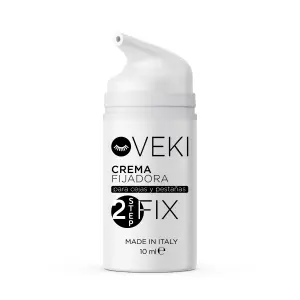
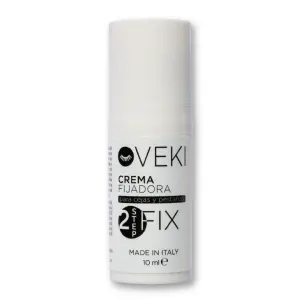
Step 2: VEKI Fixing Cream 10 ml for eyebrows and eyelashes. With aloe, collagen, and panthenol, it sets, protects, and nourishes with a professional finish.
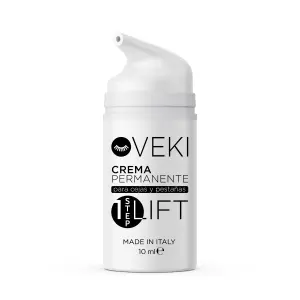

Step 1: VEKI Permanent Cream 10 ml for eyebrows and eyelashes. Vegan formula with Cysteamine that smooths, nourishes, and shapes professionally.
- Out of stock
- Out-of-Stock
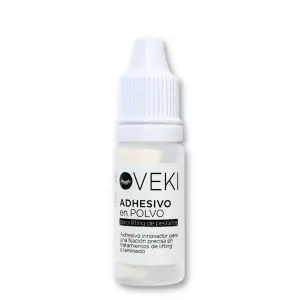
Powder Adhesive for eyelash lifting. Innovative, vegan, and nourishing adhesive with biotin, oils, and panthenol for precise fixation.